· Industry Insights · 11 min read
Jeggings Wholesale: The Bulk Buyer's Complete Guide to Sourcing & Selling
Jeggings wholesale is one of the most searched — and most misunderstood — categories in bulk apparel sourcing. Here's what they actually are, how they differ from jeans, and how to buy them profitably at scale.
What Are Jeggings? (And Why They Are Not Jeans)
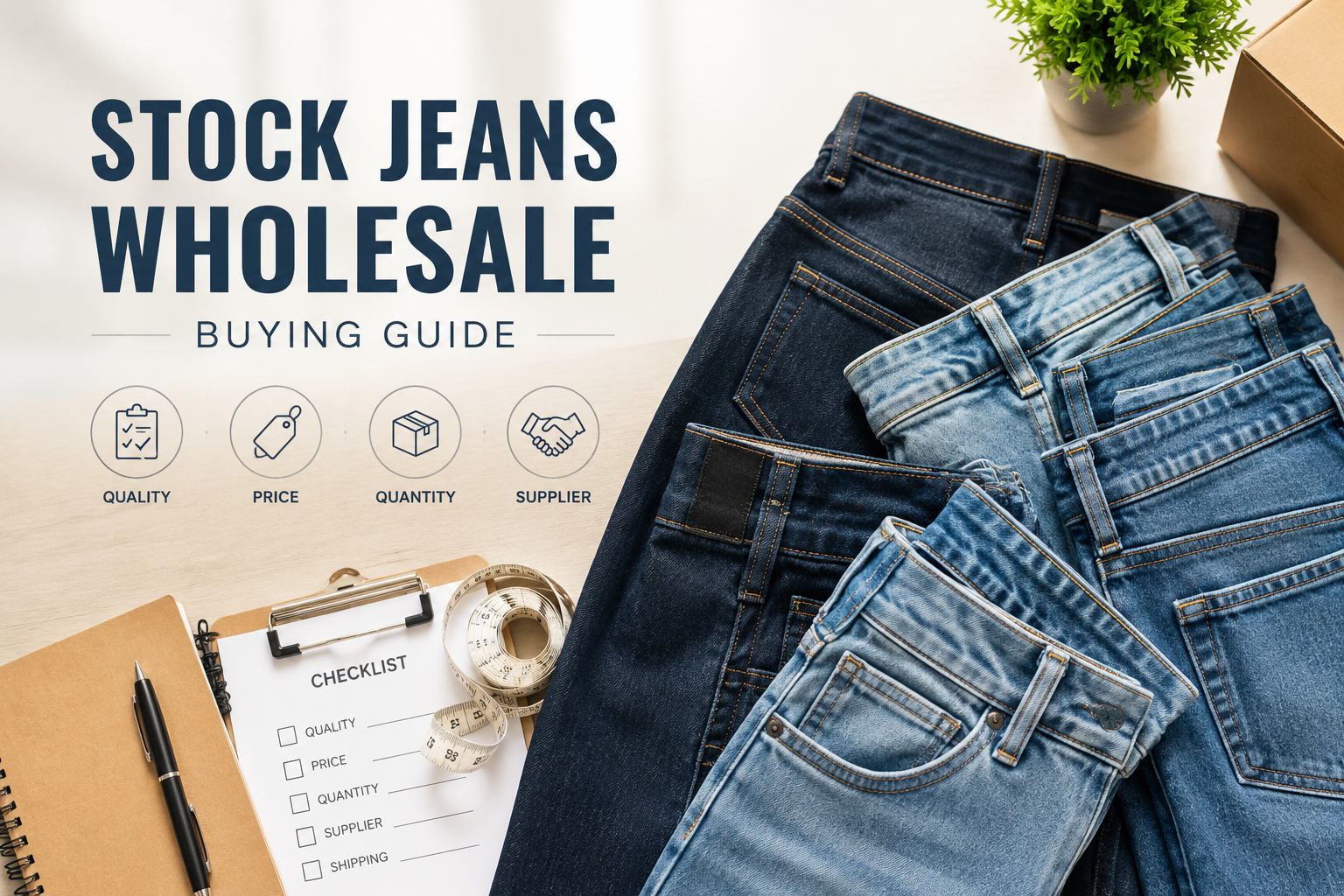
Jeggings wholesale is a growing search category among bulk apparel buyers — and one where the product definition matters enormously before you place an order. If you are sourcing globally, partnering with a reliable bulk overstock clothing wholesale supplier ensures you get verified, defect-free inventory. Buyers who confuse jeggings with denim jeans consistently end up with the wrong product for their market.
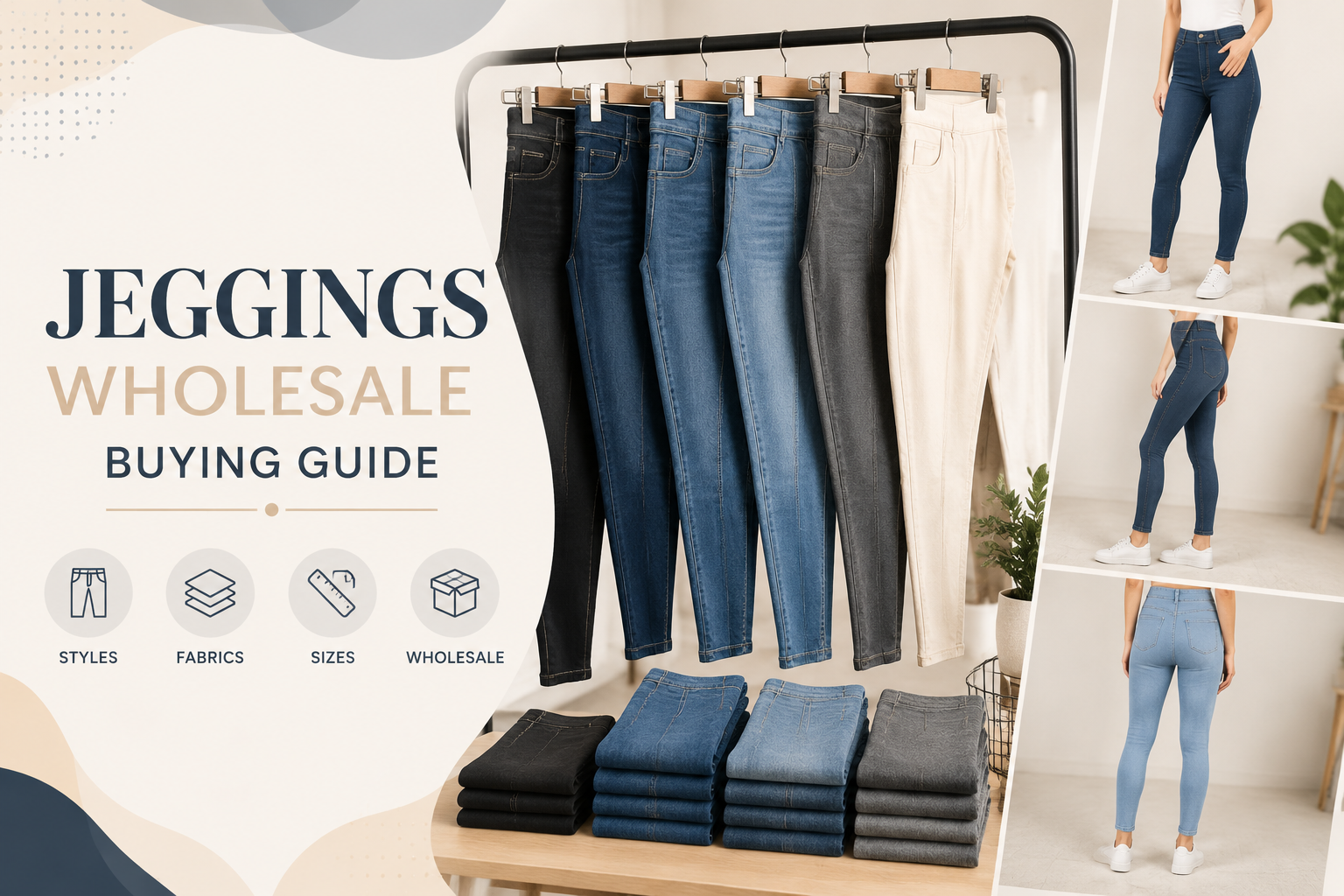
Jeggings are legging-style bottoms constructed to look like denim jeans. The name is a portmanteau of “jeans” and “leggings,” and the product sits exactly at that intersection: the visual aesthetic of skinny jeans — denim-look fabric, printed or woven front pockets, belt loop detailing, faux fly — combined with the construction and wearing comfort of leggings. No rigid waistband. No zip. No structured seam. A pull-on, stretch-fabric garment that mimics the appearance of denim without any of its construction.
The core difference between jeggings and jeans, in plain terms:
| Feature | Jeggings | Denim Jeans |
|---|---|---|
| Fabric | Stretch jersey, denim-look knit, or cotton-elastane blend | Woven denim (cotton twill) |
| Construction | Pull-on, elasticated waist, no zip | Zip/button fly, rigid waistband |
| Pockets | Usually faux (printed or non-functional) | Functional, sewn construction |
| Fit | Body-hugging, form-fitted throughout | Varies — skinny to relaxed |
| Comfort | Legging-level stretch and ease | Structured, less stretch |
| Weight | Lightweight | Heavier (10–13oz denim) |
| Care | Machine wash, quick-dry | Machine wash, slower dry |
| Target market | Women’s casual, plus-size, comfort-first | All genders, broad occasion range |
For wholesale jeggings buyers, this distinction has direct implications for customs classification, fabric sourcing, target market positioning, and resale channel selection. A buyer expecting woven denim and receiving stretch jersey jeggings has not received a substandard product — they have received a completely different product category.
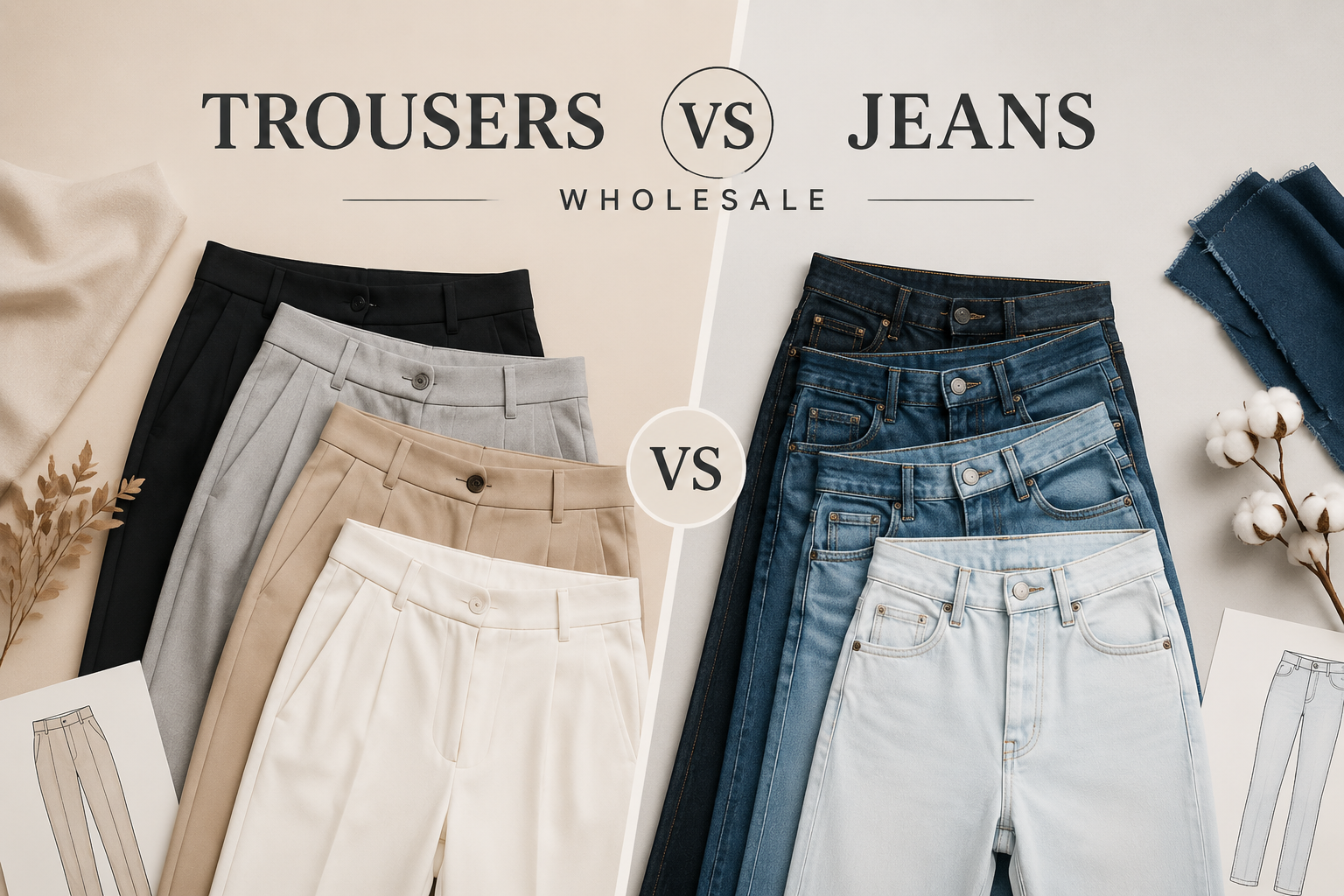
The bottom line for bulk buyers: if your market wants the comfort of leggings with the look of jeans, jeggings wholesale is your category. If your market wants actual denim construction, durability, and the weight and structure of jeans, you need to source wholesale denim jeans instead. These are not interchangeable, and treating them as such is the most common and most expensive mistake in this product segment.
Why Jeggings Wholesale Is a High-Opportunity Category Right Now
The wholesale jeggings market has expanded significantly over the past five years, driven by structural shifts in how women’s casualwear is bought and worn globally.
The athleisure trend — the gradual migration of comfort-oriented, stretch-fabric clothing from gym and home into everyday casual wear — created the conditions for jeggings to move from a niche product to a mainstream retail staple. Consumers who had adopted leggings as everyday casualwear began looking for options that offered the same wearing comfort in a format that read as more dressed. Jeggings filled that gap precisely.
The result is a product with broad addressable demand across demographics, price points, and geographies. Young women’s fast fashion, plus-size casualwear, value retail, supermarket non-food apparel, and online marketplace resale are all active channels for jeggings wholesale product. Unlike many fashion categories where trend timing determines viability, core jeggings in dark indigo and black have demonstrated consistent year-round demand — they function like comfort basics rather than fashion items.
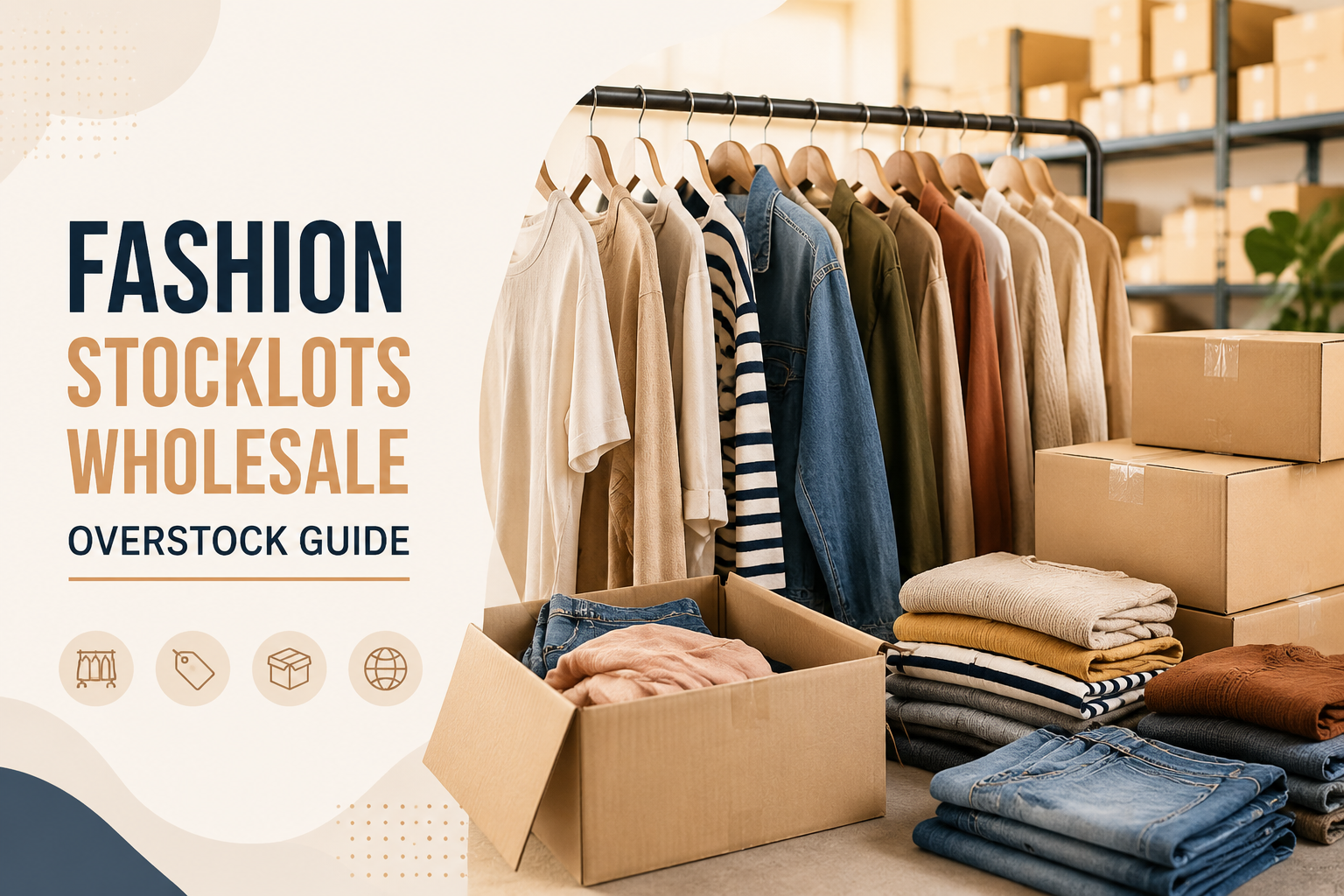
For stocklot and overstock buyers specifically, jeggings appear regularly in factory surplus pipelines because their production runs large programme quantities at major value retailers. A cancelled or overproduced programme of 20,000 units of women’s black jeggings represents a clean, high-liquidity stocklot acquisition, making it a top-tier choice for businesses focused on bulk stocklot wholesale distribution with a broad resale market.
Jeggings vs Jeans: The Wholesale Buyer’s Detailed Breakdown
Understanding the full scope of differences between jeggings and jeans at wholesale level goes beyond the surface distinction of stretch versus woven. These differences affect every stage of the buying and selling process.
Fabric and construction. Denim jeans are manufactured from woven denim fabric — a cotton twill constructed on a shuttle or projectile loom, typically weighing between 10 and 14 ounces per square yard. The fabric is stiff, structured, and requires industrial sewing machinery to construct. Jeggings are manufactured from knitted fabric — cotton-elastane jersey, viscose-elastane blends, or denim-look jacquard knits — that is inherently stretch and requires different machinery (overlockers, coverstitch machines) and different construction techniques. They are made in different factories, by different production teams, using entirely different supply chains.
HS code and customs classification. This is where the jeggings vs jeans distinction has the most immediate financial consequence for importers. Woven denim jeans classify under HS 6203/6204 (woven trousers, women’s or men’s). Jeggings, as knitted stretch garments, typically classify under HS 6104 (women’s knitted suits, ensembles, jackets, blazers, dresses, skirts, divided skirts, trousers) or HS 6114 (other garments, knitted or crocheted), depending on their precise construction. The applicable import duty rates differ by market and classification. Importing jeggings on a jeans HS code — or vice versa — is a customs error with real financial consequences. Always verify with your freight forwarder before shipment.
Size grading and fit logic. Jeans are graded by waist measurement and inseam length — a numerical sizing system (28/30, 32/32, and so on) that corresponds to body measurements in inches. Jeggings are graded by the same S/M/L/XL system used for leggings and other stretch garments, because the stretch fabric accommodates a range of body measurements within each size. This difference in sizing logic affects how you read a manifest, how you communicate sizing to your resale customers, and how you assess the size ratio of a stocklot. A “balanced size ratio” means something different for a jeggings lot than for a jeans lot.
Weight and shipping economics. Because denim is a heavy woven fabric and jeggings are constructed from lightweight knit, the per-unit shipping weight of jeggings is significantly lower than denim jeans. A container of jeggings holds more units than an equivalent container of jeans. At scale, this weight difference meaningfully affects your landed cost per unit — favourably for jeggings buyers sourcing at volume.
Retail positioning and price point. Jeggings retail at a lower price point than denim jeans in most markets, because consumers correctly perceive them as a less durable, more comfort-oriented product. This affects your margin calculation: the landed cost per unit needs to be proportionally lower for jeggings than for denim to achieve the same margin percentage. However, jeggings also tend to have lower return rates in online channels — the stretch construction accommodates fit variation better than rigid denim, reducing the sizing-related returns that are one of the largest cost factors in online apparel resale.
What to Look For When Sourcing Wholesale Jeggings
The evaluation framework for a wholesale jeggings lot has both universal elements (the due diligence checkpoints that apply to any bulk clothing acquisition) and category-specific variables that are unique to jeggings.
Fabric composition and stretch content. The elastane percentage in jeggings directly affects the garment’s wearing comfort, shape retention, and durability. The mainstream commercial range is 5–10% elastane in a cotton or viscose base fabric. Below 5% elastane, the stretch is limited and the garment can feel rigid — losing the primary consumer proposition of jeggings. Above 15% elastane, the fabric becomes very lightweight and may lack the opacity and structure needed for the denim-look aesthetic. Request fabric composition per lot and verify it matches the stated specification.
Denim-look quality. The visual credibility of the denim aesthetic varies considerably across jeggings products. At the upper end, denim-look jeggings use a genuine denim-effect jacquard knit with realistic texture and a credible indigo colour. At the lower end, a plain navy jersey with a printed pocket outline bears little resemblance to jeans and will not resell well in markets where the denim look is part of the product’s appeal. Inspect the actual fabric in person or via video — not just product photography, which can misrepresent denim-look quality significantly.
Waistband construction. The waistband is one of the highest-failure-risk components in jeggings construction. A wide, elasticated waistband in a double-layer construction will retain its shape and provide comfortable hold through repeated washing. A narrow single-layer elastic waistband will roll, distort, and generate consumer complaints. Check waistband width (ideally 3cm or wider), elastic quality, and whether the waistband is covered by fabric or exposed elastic.
Colour and wash options. Black and dark indigo are the universally liquid colours in jeggings wholesale — they approximate the most popular denim washes, they photograph well, and they have consistent demand across markets and seasons. Mid-blue and light wash options have demand in fast-fashion markets but require more market-specific knowledge to resell. Grey and coloured jeggings are fashion-trend dependent and carry the highest resale risk.
Size range and plus-size inclusion. The jeggings consumer skews significantly toward plus-size purchasing. A wholesale lot that runs only to size L or XL will not capture a meaningful portion of the addressable market. Look for lots with extended size ranges (up to 2XL or 3XL) — these are significantly more liquid in discount retail, online marketplace, and export markets than lots that stop at standard sizing.
The Jeggings Resale Market: Where to Move Volume
Jeggings wholesale product has a broader resale market than many buyers initially assume. Understanding which channels work best for which product and price tier determines how quickly you turn inventory.
Value and discount retail. The primary volume channel for core-colour jeggings at stocklot pricing. Off-price retailers, independent fashion stores, and discount chains absorb large quantities of black and dark indigo jeggings reliably — the product has a clearly understood consumer proposition, requires no explanation at point of sale, and performs well on promotional fixture.
Online marketplace resale. Jeggings are one of the strongest categories for online resale due to their low return rate (stretch fit accommodates sizing variation), low shipping weight (reducing fulfilment cost), and high photography appeal. Black and dark indigo photograph cleanly against most backgrounds. Sizing communication is simpler than for rigid denim. Online resellers who source from wholesale jeggings lots at stocklot pricing and list individually can achieve substantially higher per-unit margins than wholesale supply channels.
Plus-size specialist retail. The plus-size apparel market is structurally underserved in most geographies, and jeggings are disproportionately strong performers in this segment. Buyers who source extended-size lots specifically for plus-size retail channels — whether online or through specialist retailers — often find less competition for the inventory and stronger per-unit margins.
Export markets. Lightweight, low-cost jeggings in core colours travel exceptionally well to price-sensitive export markets across West Africa, Southeast Asia, and Latin America. The comfort-oriented fit proposition, the low retail price point, and the low shipping weight per unit make jeggings a strong export category for buyers who have established redistribution networks in these regions.
Jeggings or Jeans? Choosing the Right Category for Your Market
The most useful framework for buyers deciding between wholesale jeggings and wholesale denim jeans is not a product comparison — it is a market question.
Choose jeggings wholesale if your market prioritises:
- Comfort and stretch over structure and durability
- A lower retail price point with high volume
- The women’s and plus-size casualwear segment
- Online resale with low return rates
- Low shipping weight and fast turnover
Choose wholesale denim jeans if your market prioritises:
- Authentic denim construction and perceived durability
- A broad gender market (men’s and women’s)
- Occasion versatility (casual through smart-casual)
- A higher per-unit retail price point
- Long-term wardrobe staple positioning
Many experienced bulk buyers source both categories simultaneously — jeggings for the comfort-casualwear and value segments of their market, denim jeans for the broader everyday-wear segment. The categories are complementary, not competitive.
If denim jeans are your primary category, explore our verified factory overstock lots in our wholesale denim jeans collection — updated regularly with first-quality cancelled-order and overproduction surplus in core washes, fits, and size ranges.
EcoStocklots: Factory Overstock Across Jeggings and Denim Categories
At EcoStocklots, we source directly from factory surplus across all women’s and men’s bottoms categories — including jeggings, denim jeans, and casual trousers. Every lot is genuine cancelled-order or overproduction clearance: first-quality, defect-free, with original factory tags and full export documentation.
New jeggings and denim lots are listed as they become available. For buyers sourcing denim jeans alongside or instead of jeggings, our wholesale denim jeans stocklot collection offers verified factory overstock across core washes and fits — with transparent size ratio disclosure and direct-from-factory provenance.
Browse current wholesale denim jeans inventory → View Wholesale Denim Jeans Stocklots
Real-time inspection available: We provide live video inspections via WhatsApp for any current inventory lot. Chat with our sourcing team.
EcoStocklots is a leading B2B apparel wholesale platform specialising in factory overstock apparel clearance. We connect global importers, discount retailers, and online resellers with verified, defect-free surplus inventory at competitive bulk pricing.